
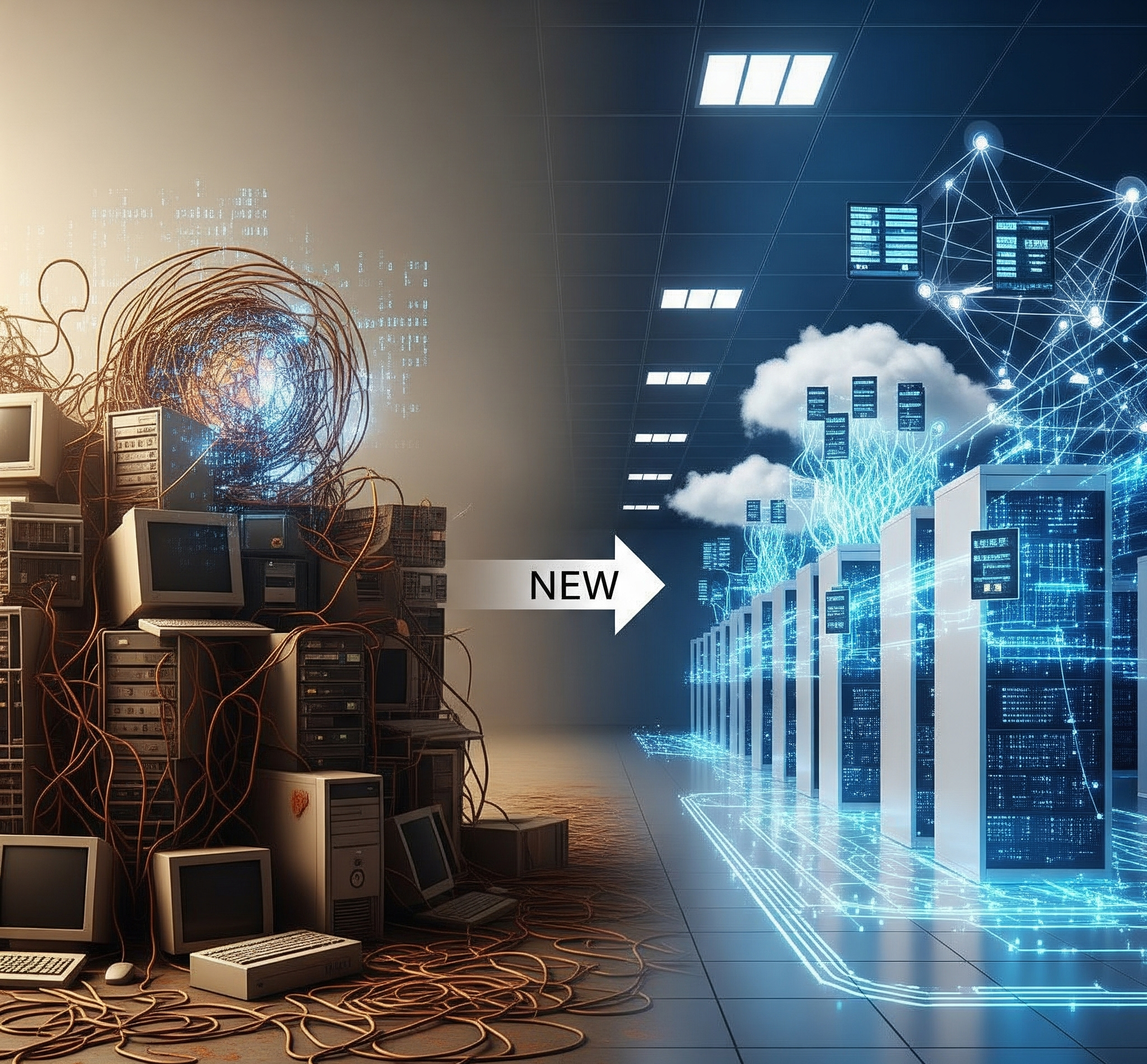

The Looming Crisis: Why Your Legacy Data Systems Can't Wait
In today's hyper-competitive digital landscape, data is the new oil. Yet, for countless businesses, this invaluable resource is trapped within antiquated systems, acting as a drag on innovation rather than an engine for growth. If your organization is still relying on legacy data infrastructure, you're not just falling behind, you're actively embracing significant risks that threaten your very survival and competitive edge. The question isn't if you should modernize your data systems, but why modernize legacy systems now?
As a seasoned expert in enterprise data management with years of experience guiding businesses through digital transformation, I've seen firsthand the profound impact – both positive and negative – that data infrastructure has on a company's trajectory. The risks of outdated data systems are no longer theoretical, they are manifesting as tangible financial losses, operational inefficiencies, and missed opportunities. This blog post will illuminate the critical reasons why urgent data modernization is not merely an IT project, but a strategic imperative that demands immediate attention.
Five Compelling Reasons for Urgent Data Modernization
1. Combating the Costs of Inefficiency and Spiraling Maintenance
The Core Issue: Legacy data systems are notorious for their operational inefficiencies. Their rigid, often siloed architectures make data retrieval slow and complex, hindering real-time decision-making. Furthermore, maintaining these aging systems is increasingly costly. Finding skilled professionals to support archaic technologies becomes a perpetual challenge, leading to inflated labor costs and expensive, specialized vendor support. The outdated data system dangers here are significant: a drain on resources that could be better allocated to innovation.
The Benefits of Modernization: Modernized data systems, often leveraging cloud-based platforms and scalable architectures, dramatically reduce operational overhead. Automation of routine tasks, simplified data access, and a broader talent pool for support translate into significant cost savings. Furthermore, cloud providers handle much of the infrastructure maintenance, freeing up your IT team to focus on strategic initiatives. This shift transforms IT from a cost center into a value driver. For example, a manufacturing company that migrated from an on-premise mainframe to a cloud data warehouse reported a 30% reduction in annual IT operational costs within the first year.
2. Fortifying Against Escalating Security Vulnerabilities and Compliance Risks
The Core Issue: Legacy systems were simply not designed with today's sophisticated cyber threats in mind. They often lack the robust security protocols, encryption capabilities, and real-time threat detection mechanisms essential for protecting sensitive business and customer data. This makes them prime targets for data breaches, ransomware attacks, and other cybercrimes. Beyond the immediate financial and reputational damage, the inability to meet evolving data privacy regulations (like GDPR or POPIA) due to inadequate systems can lead to severe penalties and legal repercussions, highlighting one of the most critical risks of outdated data systems.
The Benefits of Modernization: Modern data architectures, especially those built on secure cloud platforms, offer advanced security features, including end-to-end encryption, multi-factor authentication, robust access controls, and continuous threat monitoring. Cloud providers invest heavily in cybersecurity, often exceeding what individual companies can achieve on their own. Modern systems also provide better auditing capabilities, making compliance much easier to demonstrate and maintain. A financial institution that modernized its customer data platform significantly reduced its cybersecurity insurance premiums and achieved 100% compliance with new financial regulations.
3. Unleashing the Power of Data Analytics for Strategic Insights
The Core Issue: Outdated data systems are typically ill-equipped to handle the volume, velocity, and variety of modern data. They often store data in disparate silos, making it nearly impossible to gain a holistic view of your business operations, customer behavior, or market trends. This severely limits your ability to perform advanced analytics, leverage artificial intelligence (AI) and machine learning (ML), or generate the actionable insights necessary for competitive advantage. You're effectively flying blind in a data-driven world, which is a major outdated data system danger.
The Benefits of Modernization: Modern data platforms, such as data lakes and data warehouses, are designed for scalability and flexibility, allowing you to integrate diverse data sources and process massive datasets. This unlocks the potential for advanced analytics, predictive modeling, and AI-driven insights. Businesses can then identify new revenue opportunities, optimize operations, personalize customer experiences, and make more informed strategic decisions. A retail giant, after modernizing its inventory data system, was able to predict seasonal demand with 95% accuracy, leading to optimized stock levels and reduced waste.
4. Enhancing Agility and Accelerating Time-to-Market
The Core Issue: The rigid, monolithic nature of legacy systems makes them incredibly difficult and time-consuming to modify or integrate with new applications and technologies. This lack of agility stifles innovation, slows down product development cycles, and prevents businesses from rapidly responding to changing market demands or competitive pressures. Every new initiative becomes an uphill battle, consuming disproportionate resources and time. This inherent inflexibility is a key reason why modernizing legacy systems now is so critical.
The Benefits of Modernization: Modern, cloud-native architectures are designed for flexibility and interoperability. They embrace microservices, APIs, and containerization, allowing for rapid development, deployment, and integration of new features and services. This significantly shortens time-to-market for new products and services, enabling businesses to be more agile and responsive to market shifts. A software company that migrated its development environment to a modern cloud platform reduced its release cycles from months to weeks, giving it a significant competitive edge.
5. Attracting and Retaining Top Talent
The Core Issue: The prospect of working with outdated, cumbersome legacy systems is a major deterrent for top-tier IT professionals. Young, ambitious talent is drawn to organizations that leverage cutting-edge technologies and offer opportunities for innovation. Being stuck with antiquated systems can lead to a "brain drain," making it difficult to recruit skilled individuals and retain existing talent, ultimately impacting your organization's ability to drive future growth and innovation. This can be a subtle but profound outdated data system danger.
The Benefits of Modernization: Investing in modern data infrastructure signals a forward-thinking and innovative culture. It provides your IT team with exciting challenges and opportunities to work with leading-edge technologies, fostering professional growth and job satisfaction. This makes your organization a more attractive employer, helping you to recruit and retain the best talent in a highly competitive market. Furthermore, modern systems often simplify operations, reducing the frustration and burnout associated with maintaining complex, fragile legacy environments.

Don't Wait: The Time for Data Modernization is Now
The evidence is clear: the risks of outdated data systems far outweigh the perceived costs of transformation. Ignoring the call for urgent data modernization is a direct path to competitive disadvantage, security vulnerabilities, and operational stagnation. The benefits, conversely, are profound: increased efficiency, enhanced security, invaluable strategic insights, accelerated innovation, and a stronger talent pool.
The digital future is here, and your data infrastructure needs to be ready. Don't let your legacy systems hold your business hostage. The time to act is now.
Ready to unlock your data's full potential and secure your business's future?
Book a Discovery Call to learn more about modernizing your data systems and charting your path to digital excellence.